
You’ve entered your destination. The Satnav indicates three possible routes. Route A is the fastest. Route B is the most scenic. Route C avoids the motorways and takes you the quieter way around.
All three arrive at the same place with varying arrival times.
Which way to go today? What’s the priority? Speed? Flow? A scenic drive to help you think?
As the engine hums a thought occurs to you: this is exactly how your leadership operates. Especially in those tense executive meetings.
While others are vocalising possibilities—thinking on the go, rapidly firing ideas—you’re running silent calculations. Mapping outcomes in your head. Weighing the implications. Quietly—but no less rigorously—getting clarity for a good way forward.
You don’t always get to say what you’ve worked out.
But that doesn’t mean you haven’t something valuable to say.
A Different Route—Not a Wrong One
Introversion can seem like a barrier to strong leadership. In fact, it’s often the secret strength behind thoughtful, future-facing decisions. Yet in the boardroom, volume can masquerade as value. Fast talk can be mistaken for fast thinking. As an introverted leader you can risk being overlooked—not because you lack insight, but because you arrive at it quietly.
This doesn’t mean you need to become louder or change who you are. It does mean that finding your own route to being heard is essential.
How can you show up with presence and clarity—without becoming someone you’re not?
Here are five possible ways:
Pre-wire the Conversation
You process internally. That’s a strength. Use it. Get as much information as you can on the issues to be discussed.
Before key meetings, identify who will be critical to the decision. Share a brief outline of your thinking in advance—via email or one-on-one conversations. This allows your voice to shape the room before it even starts speaking.
Research from Susan Cain, author of Quiet, shows that introverts often influence most effectively in smaller, intentional conversations rather than large group debates. Pre-wiring ensures your thought process isn’t lost in the noise.
You don’t have to be the first to speak. But you can be the first to plant a seed.
Claim the Pause
Silence is not a weakness—it’s a signal of depth.
When others finish talking, instead of rushing to fill the gap, use the moment. Say:
“I’ve been thinking about this from a different angle—may I offer that?”
or
“Give me a moment—I have a thought forming that might help us here.”
People will pause for the person who values their own contribution.
As Adam Grant notes in his research, “introverts often bring clarity, not volume.” Give your insight weight by allowing it space.
Use Written Influence
You may not dominate the meeting—but you can lead the thinking that follows.
Following the meeting. Summarise key points, propose next steps, or share a decision framework after the fact. A well-written follow-up can refocus a team, offer clarity, and elevate your voice—especially when the meeting felt like a verbal wrestling match.
Harvard Business Review suggests that written communication is one of the most underutilised leadership tools by introverts—yet it offers lasting impact.
Curate the Room, Don’t Compete with It
You don’t need to be the loudest voice—you can be the one that listens best.
Frame your contribution as a synthesis:
“I’ve heard several valuable points—here’s how I see them connecting.”
Introverted leaders are often excellent at pattern recognition and sense-making. Bring that gift into the room. When you name what others have missed, people pay attention.
This positions you not just as a thinker—but a strategic integrator.
Name Your Style—and Normalise It
You lead differently. Let others know that.
Say it up front this helps set context for your colleagues:
“I do my best thinking internally, so I may speak later in the conversation—or follow up in writing.”
This isn’t an apology—it’s a calibration. Once colleagues understand your rhythm, they’ll start looking for your insight instead of overlooking it.
It’s also a subtle act of modelling that gives permission to other introverts in the room to do the same.
Final Thought: Don’t Mistake Quiet for Absence
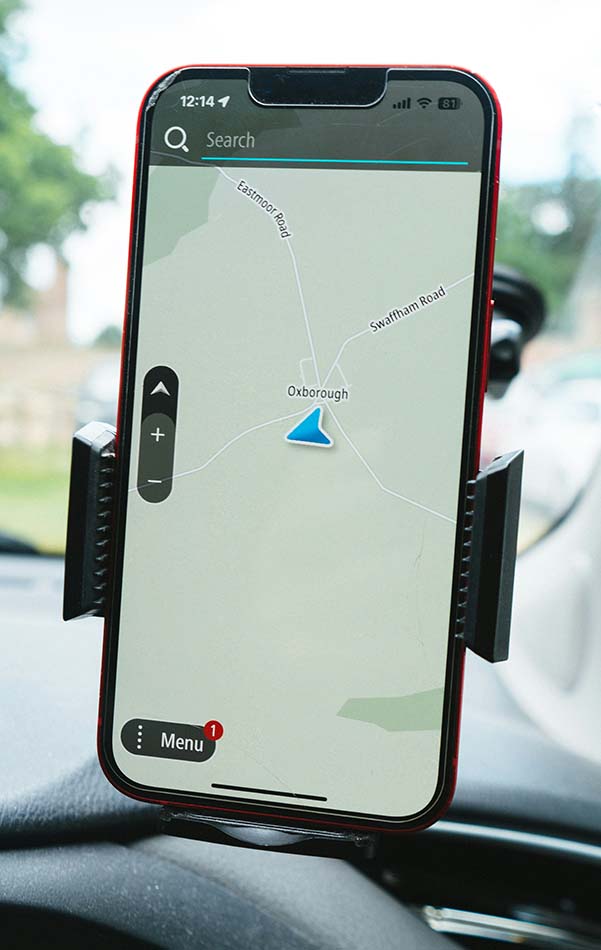
In the same way every Satnav route leads to the destination, your quieter path to clarity is still leadership.
You don’t need to blast the horn to arrive.
You don’t need to take the motorway to be effective.
You need to drive with intention—and trust the power of your route.
Because leadership isn’t about noise.
It’s about impact.
And your way works.
Do you want to explore how you can strengthen your introverted leadership presence in a way that feels authentic, energising, and clear?
Then the Leadership Retreat I have planned in October 2025 maybe for you. Register your interest on the form at the base of this blog. There are only 12 spaces available.
